
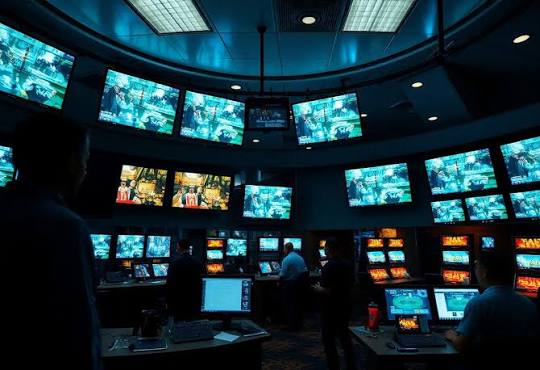
Modern casinos rely on a broad mix of physical security measures and digital systems. Security software helps staff coordinate these measures, manage information, and respond to potential incidents. Depending on the casino, the technology may support video surveillance, access permissions, incident reporting, cybersecurity, or monitoring of selected operational systems.
Software is only one part of a complete security program. Its value depends on how well it fits the venue’s procedures, how reliably it operates, and whether staff are trained to use it appropriately.
Managing Surveillance Systems
Video management software allows authorized staff to view camera feeds, manage recordings, and retrieve footage for review. In a large venue, centralized tools can help security teams handle many cameras without relying on separate controls for every device.
The system may also provide camera status information, recording alerts, or search features. These functions can help staff identify technical problems and find relevant footage after an incident.
However, software cannot compensate for every camera-placement or image-quality problem. Regular equipment checks and appropriate coverage planning remain necessary.
Controlling Access to Restricted Areas
Casinos often have areas that require restricted access, such as equipment rooms, cash-handling spaces, offices, or technical facilities. Access-control software can manage permissions for compatible card readers, electronic locks, and related devices.
Administrators can assign access based on job responsibilities and update permissions when roles change. Logs may help establish when an authorized credential was used, although they do not always prove who physically used it.
Strong credential management, prompt removal of unnecessary permissions, and procedures for lost cards or suspected misuse are important parts of the process.
Coordinating Incident Reports
Security teams need a consistent way to record and follow up on incidents. Case-management or incident-reporting software can organize descriptions, times, assigned staff, supporting files, and follow-up actions.
A centralized record can reduce the risk of information being scattered across emails, paper notes, and disconnected systems. It may also help managers identify recurring operational issues.
Access should be restricted because incident reports can contain sensitive personal, financial, or security information. Records should be accurate, factual, and retained according to policy and law.
Supporting Cybersecurity
Casino operations depend on computers, networks, accounts, and connected equipment. Security software may help protect these systems through endpoint protection, access management, vulnerability monitoring, network security tools, and centralized logging.
No single cybersecurity product provides complete protection. Effective security requires secure configuration, software updates, backups, staff awareness, and a response plan for suspected incidents.
Systems that support gaming, payments, surveillance, or other critical functions may need additional safeguards because disruptions can affect multiple operations.
Integrating Security Information
When systems are compatible, security platforms can bring together selected alerts or records from different sources. This may help staff understand whether an event involves a camera, an access-controlled door, a network device, or another monitored system.
Integrations should be carefully tested. Incorrect timestamps, duplicated alerts, and poorly defined permissions can reduce their usefulness. Not every system should be connected to every other system; access should follow the principle of limiting information and privileges to what is needed.
The Role of Staff and Procedures
Security software can display information and automate selected tasks, but trained people must interpret events and make appropriate decisions. Staff need clear escalation paths, defined responsibilities, and regular training.
Casinos should also test whether their systems and procedures work as intended. Exercises, access reviews, incident reviews, and vendor assessments can reveal weaknesses before they cause a larger problem.
Conclusion
Security software helps modern casinos manage surveillance, access control, incident records, and cybersecurity through more organized workflows. Its effectiveness depends on reliable technology, appropriate integrations, and trained personnel. A strong security program treats software as a tool within a broader system of prevention, response, accountability, and continuous improvement.
FAQs
1. What does casino security software do?
Depending on the platform, it may manage surveillance, control access, document incidents, monitor systems, or support cybersecurity.
2. Can security software replace security personnel?
No. Software supports monitoring and coordination, while people remain responsible for interpretation, response, and many operational decisions.
3. Why should casinos limit software permissions?
Restricted permissions reduce the chance of unauthorized access and limit the potential impact of compromised accounts.
4. Should all casino security systems be integrated?
Not necessarily. Integrations should serve a clear purpose and be tested for compatibility, security, and reliability.
One Reply to “How Security Software Protects Modern Casinos”