
When someone plays a casino game, a question often appears in the back of their mind. Who actually decides the result?
Is it the casino owner behind the scenes?
Is it the dealer at the table?
Or does the machine itself somehow decide when someone should win?
When a player presses a button on a slot machine or joins an online table game, the result appears almost instantly. Reels spin, cards appear, or a digital roulette wheel stops on a number.
To players, that moment can feel mysterious.
Some people believe casinos secretly control outcomes. Others think machines track player behavior and adjust results. A few imagine that casinos can turn games “looser” or “tighter” whenever they want.
In reality, most modern casino games rely on a powerful piece of technology working quietly in the background.
It is called Random Number Generator software, often shortened to RNG.
This invisible system plays the central role in deciding what happens in millions of casino games every day.
The Invisible Engine Behind Casino Games
A Random Number Generator is a computer algorithm designed to produce sequences of numbers that cannot be predicted.
Think of it like a digital engine that constantly creates numbers every millisecond, even when nobody is playing.
When a player presses the spin button on a slot machine or deals cards in an online blackjack game, the software simply captures the number generated at that exact moment.
That number determines the outcome.
For example:
- In a slot game, the number decides where each reel stops.
- In online blackjack, the number determines which card appears next.
- In digital roulette, it determines the winning pocket.
The key detail is that the system never stops generating numbers. Even when a game is idle, the RNG continues producing values thousands of times per second.
Because of this speed, predicting the result is practically impossible.
A gaming software engineer once explained it like this:
“The moment you press the spin button is like taking a snapshot of a number from a stream moving faster than lightning.”
That number is then translated by the game into the symbols, cards, or results the player sees on the screen.
Random Results Do Not Remember the Past
One of the most misunderstood ideas in gambling is randomness.
Many players believe that if they lose several rounds in a row, a win must be coming soon.
But random number systems do not work that way.
Every result is independent.
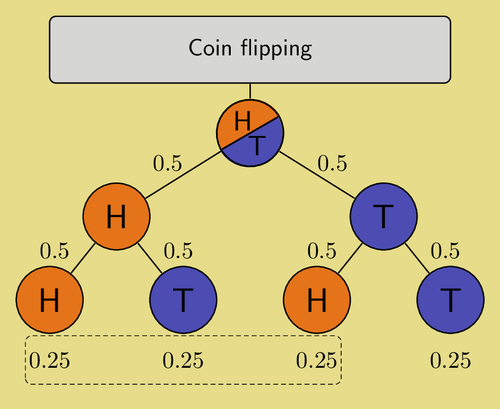
To understand this, imagine flipping a coin.
Even if a coin lands on heads five times in a row, the next flip still has a 50 percent chance of landing on heads or tails.
The coin has no memory.
Random Number Generators work in the same way.
They do not track your losses.
They do not reward players for playing longer.
They do not punish someone for winning earlier.
Each spin, card draw, or roll happens as a completely new event.
This concept is known in probability theory as independent outcomes.
How Casinos Prove Their Games Are Fair
Because gambling involves money, fairness is extremely important. Reputable casinos cannot simply claim that their games are random.
They must prove it.
Independent testing laboratories analyze casino software before it is approved for public use. These companies run millions of simulated game rounds to study how the system behaves.
Their goal is to verify three key things:
- The numbers are truly random.
- The results match the game’s expected probabilities.
- The software cannot be manipulated.
If the system fails these tests, the game cannot legally operate in regulated markets.
Regulators in many countries require licensed casinos to use certified RNG systems that follow strict standards.
These tests ensure that no casino employee, software developer, or external party can control the results.
A regulatory consultant once described the process this way:
“Before a casino game goes live, its software may go through millions of simulated spins or card deals to confirm the math behaves correctly.”
Understanding RTP and the Casino Advantage
Another concept closely connected to RNG systems is Return to Player, often called RTP.
RTP represents the average percentage of wagered money that a game returns to players over a very long period of time.
For example:
- A slot machine might have an RTP of 96 percent.
- That means that over millions of spins, the game will return about 96 dollars for every 100 dollars wagered.
However, this does not mean every player receives that amount.
In real sessions:
- One player might win a large jackpot.
- Another might lose their entire balance.
The RTP simply describes the long term mathematical average.
Because the RTP is slightly below 100 percent, the casino keeps a small percentage over time. This is called the house edge.
For many slot machines, the house edge ranges between 2 percent and 6 percent, depending on the game.
This small advantage allows casinos to operate as profitable businesses while still offering fair games based on random results.
Why Randomness Often Feels Unfair
Even though RNG systems are designed to be fair, many players still doubt them.
The reason lies in human psychology.
People are naturally good at spotting patterns. Our brains constantly search for meaning in sequences of events.
When a player loses several rounds in a row, it feels like something unusual is happening.
But in random systems, streaks are completely normal.
For example, probability experts often explain that long losing streaks can occur even in perfectly fair games.
A player on an online gambling forum once wrote:
“I lost twelve spins in a row and thought the game was broken. Later I learned streaks like that are actually normal.”
Another player commented:
“When you win three times quickly it feels lucky. When you lose three times it feels suspicious.”
These reactions are common because humans prefer stories and patterns, while random systems simply follow mathematics.
The Technology Behind Modern RNG Systems
Modern casino RNG systems rely on advanced cryptographic algorithms.
Some systems generate numbers using complex mathematical formulas. Others combine those formulas with unpredictable external inputs such as timing data or electronic noise.
This makes it extremely difficult to predict future numbers even if someone understands the algorithm.
Online casinos also protect their software with multiple security layers including encryption and secure servers.
The technology is similar to systems used in banking and financial platforms.
Because of these protections, manipulating RNG outcomes would require breaking some of the strongest security systems in the digital world.
What Real Players Think About RNG

Discussions about RNG fairness appear frequently in online gambling communities.
Many experienced players eventually learn how randomness actually works.
One long time player shared this opinion in a gaming discussion:“The hardest lesson is accepting that randomness doesn’t care about your last ten spins.”
Another player wrote:
“Once I understood RNG, I stopped thinking the machine was targeting me.”
These comments reflect a common shift in perspective. When players understand the mathematics behind casino games, the mystery becomes easier to accept.
The Real Decision Maker in Casino Games
After exploring how casino games work, the answer to the original question becomes clearer.
Who decides whether you win or lose?
Not the casino owner.
Not the dealer.
Not a hidden operator watching the screen.
In most modern games, the result is determined by a Random Number Generator, guided by mathematics and probability.
Players see the reels spinning or cards appearing on the screen, but behind the scenes a stream of numbers is flowing constantly.
When the spin button is pressed, the system simply captures the number at that moment and translates it into the game result.
Sometimes that number leads to a win.
Other times it does not.
But every outcome begins in the same place.
Inside a silent algorithm producing numbers faster than any human could ever follow.
And in the world of casino games, those numbers are what truly decide the outcome.