
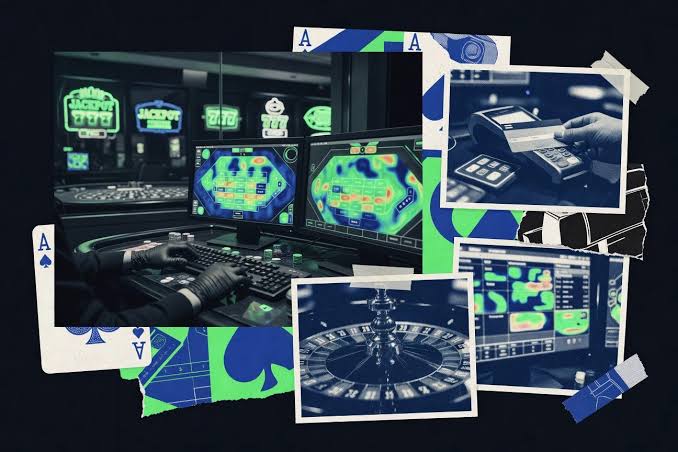
Casino player tracking systems bring together hardware, software, databases, and network infrastructure to manage eligible player activity. They are commonly associated with loyalty programs, but their functions can extend to account services, reporting, and operational analysis.
These systems are not identical across casinos. Their capabilities depend on the operator, technology provider, gaming equipment, regulatory requirements, and the choices players make about participating.
The Main Components
A typical player tracking system includes several connected elements:
- Identification devices: Card readers or compatible terminals associate an activity session with an account when appropriate.
- Gaming equipment interfaces: Approved machines or electronic gaming systems provide permitted activity information.
- Network infrastructure: Secure connections carry data between floor equipment and central services.
- Application software: Programs process activity records, manage account functions, and apply loyalty-program rules.
- Databases: Authorized records are stored and retrieved according to the system’s design and data policies.
- Staff interfaces: Approved dashboards and service terminals allow employees to access information relevant to their roles.
Each component has a distinct function. A failure or configuration problem in one area can affect the service provided by the wider system.
How Information Moves Through the System
When a player uses a loyalty card at compatible equipment, the reader sends an account reference to the connected platform. Depending on the setup, the platform may associate eligible activity with that account and update the relevant record.
The software then applies program rules, such as how points are calculated or how account information is displayed. The details vary between operators, and not every gaming machine or activity is necessarily included.
Information may be transferred continuously or in batches, depending on the system architecture. Operators need to understand whether reports are real-time, delayed, or limited to specific data sources.
Databases, Reporting, and Integration
Databases help organize account details and activity records. Reporting tools can summarize information for authorized business purposes, such as loyalty administration, service management, or aggregated analysis.
Integration is a major technical challenge. A casino may operate equipment from different manufacturers, and older systems may not communicate easily with newer platforms. Interfaces, supported protocols, and carefully tested software connections can help bridge these differences.
Data quality matters as well. Duplicate records, missing sessions, incorrect account associations, or delayed updates can affect reporting. Reconciliation and monitoring processes help identify inconsistencies.
Security and Privacy
Player tracking systems can contain sensitive personal and activity information. Casinos should apply strong authentication, role-based access, encryption where appropriate, secure system configuration, and audit logging.
Data should be collected and retained according to disclosed purposes and applicable law. Access should be limited to employees who need the information for their work. Operators should also have procedures for handling suspected breaches, system failures, and requests relating to personal information.
The Role of Analytics
Some platforms offer analytical tools that summarize permitted activity. These tools may help operators evaluate loyalty-program performance or understand general patterns in service use.
However, data is only useful when its limitations are understood. Records may be incomplete, and correlations do not automatically explain why someone behaved in a particular way. Analytics should not replace sound judgment or responsible privacy practices.
Conclusion
Casino player tracking systems depend on a coordinated combination of devices, networks, software, and data management. Reliable integration helps the technology support loyalty services and reporting, while strong security and transparent policies protect the people whose information is processed. The most effective system is not simply the one that collects the most data, but the one that handles appropriate data accurately and responsibly.
FAQs
1. What software is used in casino player tracking?
Systems generally use applications for account management, activity processing, loyalty rules, reporting, and staff access. Specific products vary by operator.
2. Do player tracking systems work in real time?
Some information may update in real time, while other records or reports may be delayed or processed in batches.
3. Why is integration difficult?
Casinos may have equipment from different vendors, legacy platforms, and varying technical interfaces, all of which require compatibility testing.
4. Is player tracking data sensitive?
It can be. Personal and activity records should be protected through appropriate security, access, retention, and privacy controls.

One Reply to “The Technology Behind Casino Player Tracking Systems”